Stage Makeup: The
The Essentials
- Exaggerating contrasts: Push the intensity of your highlights and shadows to counter the sheer power of stage lights.
- Fluorescent calibration: Test your makeup under harsh lighting (e.g., in a restroom) to anticipate how it will look on stage.
- Adapting to gels: Adjust your pigments based on the lighting design (e.g., avoid warm tones under yellow lights).
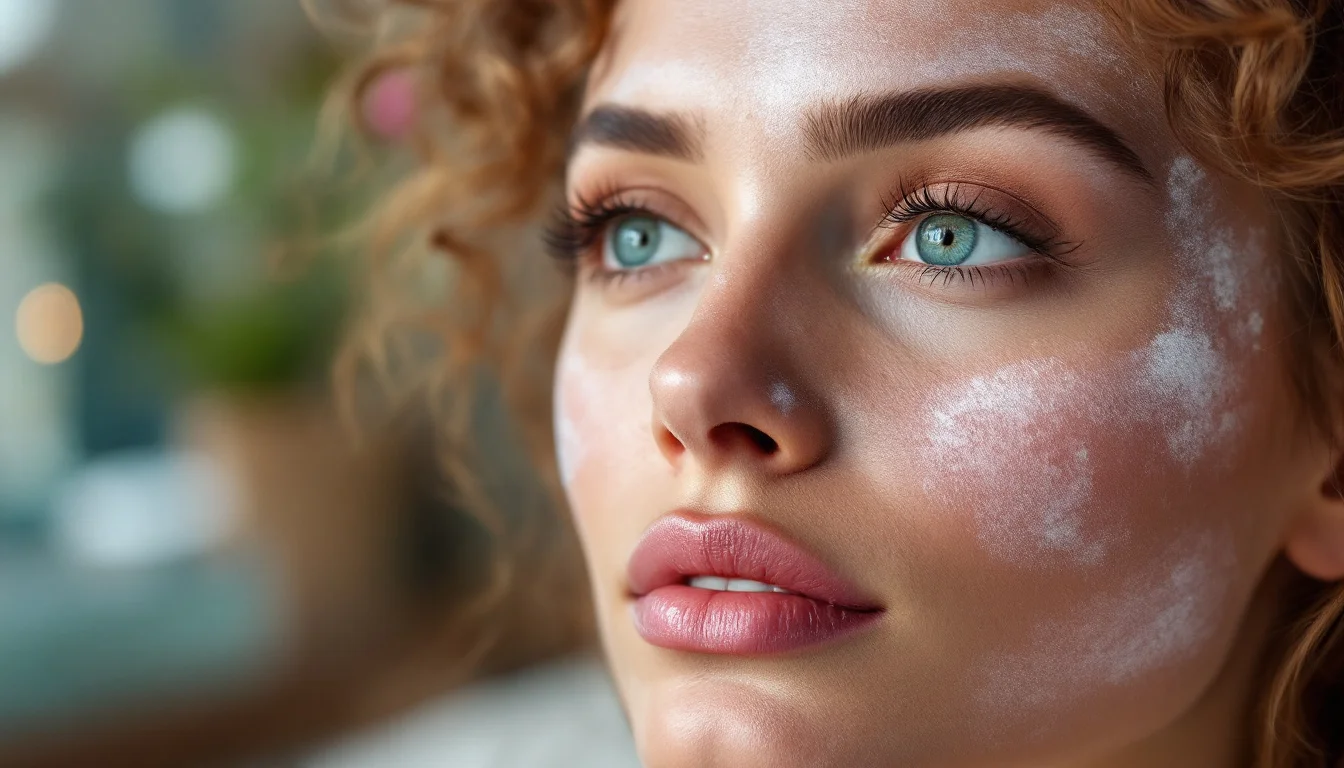
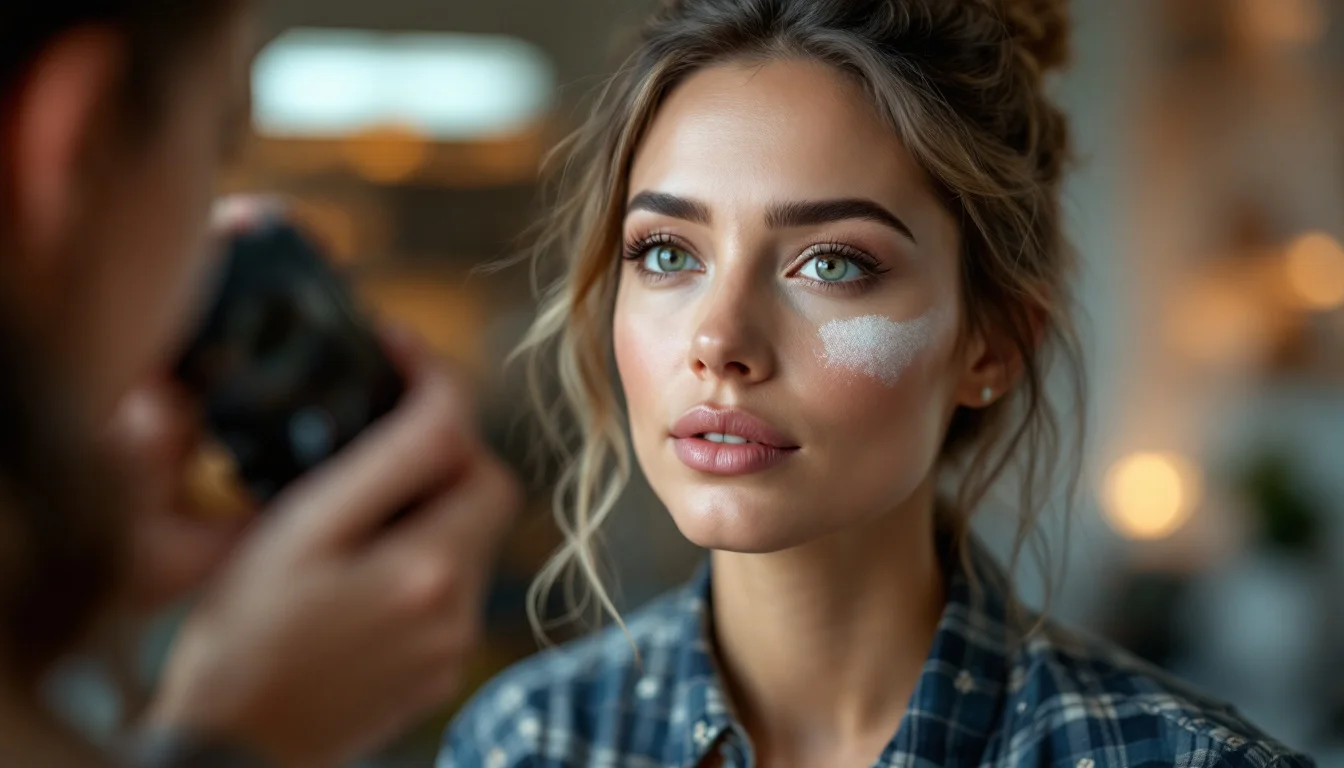
- Thermal insulation: Mattify the face with translucent powder to isolate and target only the effect of the highlighter.
The Stakes of Non-Verbal Communication
A performer's face remains their primary tool for audience communication. If a crowd plunged in darkness cannot clearly read the artist's facial expressions, one of the most powerful channels of connection is severed.
Counteracting this effect requires a structural approach to preparation. This visual degradation affects all public speakers and entertainers, including magicians, lecturers, and musicians. Every one of them must artificially restore their facial architecture to compensate for the harshness of the spotlights.
Why are blush and highlighter essential under frontal lighting?
Once the face is erased by directional lighting, its original structure must be physically redrawn using contrast. This is precisely where the strategic application of highlighting and contouring pigments comes into play to recreate the illusion of depth.
The Geographical Placement of Contrasts
Technical guidelines emphasize that contour and highlighter serve to define facial features so they pop under the lights. Restoring volume requires highly specific placement:
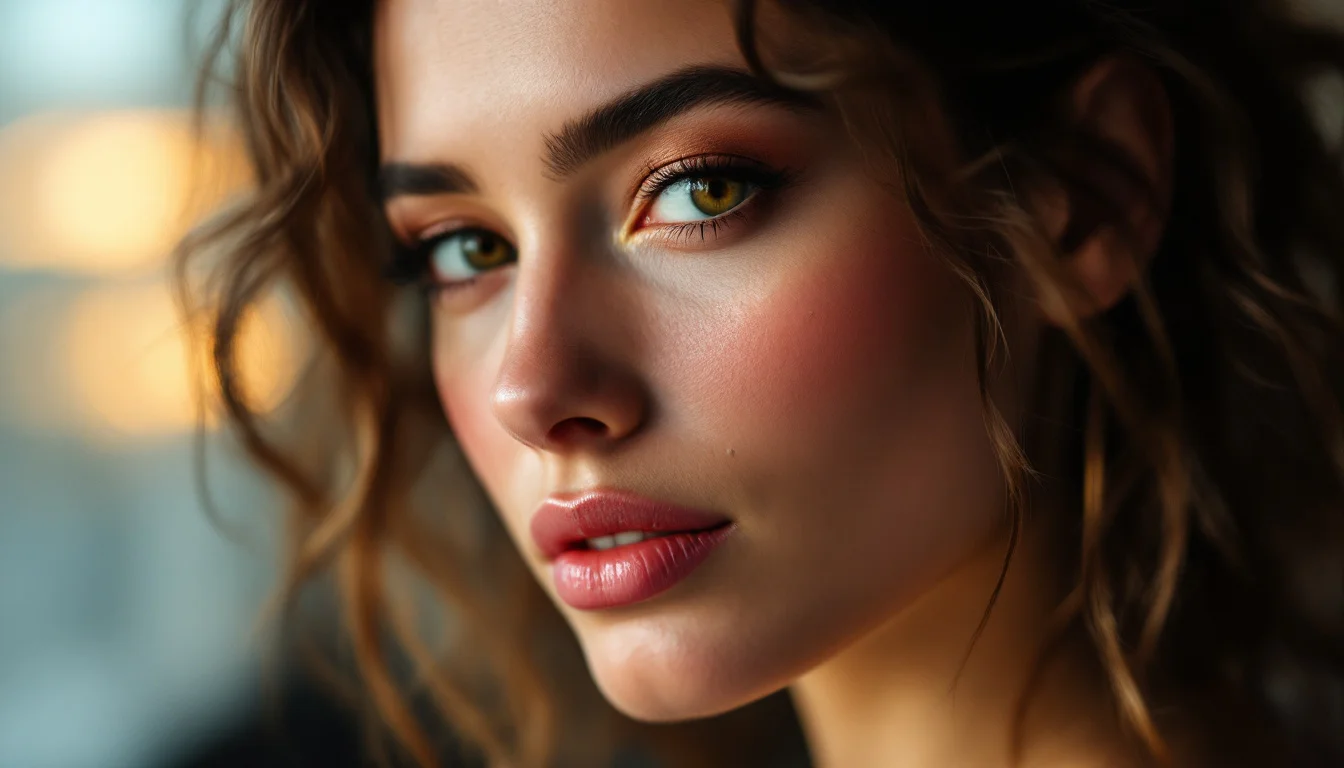
- Blush adds a touch of color to the apples of the cheeks for a healthy glow, while contour (a shade slightly darker than the skin tone) reintroduces a shadow dimension along the cheekbones and jawline.
- Highlighter is applied exactly on the highest points of the cheekbones to catch the light beams and enhance structural relief.
The Absolute Necessity of Exaggeration
This structural sculpting leaves no room for subtlety. Experts explain that to maintain the dimension and relief of the face across a vast auditorium, you must exaggerate both the light and the dark (the famous highlights and lowlights).
Relying on subtle nuances is a fundamental mistake. A gradient that looks delicate in the dressing room will turn into a featureless blank canvas once hit by the sheer power of professional lighting. The intensity of your contrasts must be pushed far beyond everyday daytime standards.
How do you evaluate your color contrast before stepping on stage?
One of the most daunting challenges for an artist lies in evaluating their own facial contrast before hitting the stage. Traditional mirrors or dimly lit dressing rooms almost always lead to underestimating the amount of pigment needed to survive the spotlights.
Harsh Calibration
Felix Lenhard, author of the Vulpine Creations guide, outlines a mechanism for visual assessment: makeup must absolutely be applied (or at least checked) under the harshest fluorescent lighting available at the venue—often found in the public restrooms. Calibrating intensity generally relies on a practical rule of thumb:
- If the result looks aesthetically flawless under standard fluorescent lighting, it will likely be heavily washed out on stage.
- If the result appears slightly overly defined and harsh under this raw light, the application will be perfect under theatrical beams.
The Gel Trap: Adapting Pigments to the Light
Overdoing the contrast isn't enough if you ignore the color temperature of the spotlights. The tech booth's use of colored gels radically alters the optical behavior of the pigments applied to the skin. Strict colorimetric adaptation is the only way to adjust to the specific lighting conditions of the stage.
The Colorimetric Reaction of Powders
A detailed analysis published by Cinema Makeup breaks down the specific reactions of cosmetics under different spectral filters:
- Under red lighting, red pigments blend into the ambient light, while other colors become abnormally dark or lose their initial definition.
- Under purple or magenta light, the lighting intensifies red and blue pigments, while largely absorbing green tones.
- Under warm lighting with yellow, orange, or red dominants, red and orange pigments become much more prominent. Conversely, yellow or orange undertones in the base can become particularly difficult to distinguish from the surrounding skin.
Color Correction Chart
| Lighting Environment | Observed Technical Effect on the Face | Corrective Action |
|---|---|---|
| Red light | Red pigments disappear into the light; everything else darkens | Opt for strong variations in value and texture to remain distinct from a distance |
| Magenta light | Highly colored environment; intensifies cold/warm extremes | Abandon subtle realism, which becomes illegible; force pure architecture |
| Warm light | Yellow/orange tones merge with the base complexion | Avoid warm shades in your base; use highlighter to punch through the warm light |
These optical interactions prove that a highly saturated color environment renders any subtle corrective approach obsolete. Directional contrast and the smart use of textures must take precedence over simple color matching.
Foundation: Do you really need to darken your complexion?
Choosing a base coverage raises a major methodological contradiction among experts, revealing two fundamentally different schools of thought when it comes to managing highlights.
Two Approaches to Light Correction
On one hand, knowing that stage lighting intensely washes out the skin, the M. Cramer & Associates guide recommends selecting a foundation that either matches your natural complexion or goes one to two shades darker. Furthermore, the level of coverage depends on the size of the venue and the lighting intensity: foundation should be slightly heavier for large venues or intense lighting, and lighter for intimate stages or a close-up audience.
On the other hand, a second approach argues that the main goal isn't to create theatrical makeup meant to be scrutinized up close. Its premise is to use a foundation or tinted moisturizer that exactly matches the skin tone—neither lighter nor darker—to provide just enough correction so that what the audience sees from ten, twenty, or fifty meters away looks as true to the performer's actual appearance as possible.
This divergence between the two approaches is well-documented and remains unresolved: it reflects a difference in intent (full theatrical makeup vs. minimal correction for non-acting performers). Both stances are justifiable depending on the context.
Choosing Based on the Performer's Intent
The performer's intent and the format of the show can resolve this technical paradox:
- Character creation: An actor on a theater stage flooded by the white light of high-powered Fresnel spots will follow the first recommendation, darkening their complexion to prevent total washout.
- Stealth presence: A musician, public speaker, or indie artist will apply the second principle. Aiming for individual recognition, they will opt for their exact shade, favoring an aesthetic that preserves their authentic identity from fifty meters away.
Managing Thermal Shine Without Dulling the Highlighter
Exposure to the heat generated by directional beams triggers an unavoidable bodily thermal response. Sweat very quickly creates an uncontrolled shine that competes with and ruins the precise optical placement of the highlighter.
Isolating the Highlights
To maintain control over your facial volume, it is imperative to cancel out accidental, heat-induced shine without affecting the deliberately added structural highlights. The targeted application of a lightweight translucent powder effectively eliminates that all-over glare that makes a performer look sweaty under the spotlights.
By rigorously mattifying the forehead, nose, and perioral area, the performer ensures that light bounces exclusively off the zone targeted by the highlighter, placed high on the cheekbones. The light beam remains guided, contributing to the 3D reconstruction of the face rather than interfering with it.
FAQ: Technically Validating Your Stage Makeup
How can I check my contrast levels during soundcheck? Visual testing requires an outside perspective. Position yourself under the final lighting setup and ask a crew member to observe you from the middle of the room. This feedback allows for immediate adjustments if a highlighter vanishes under a magenta wash or if a shadow needs deeper carving.
Do male performers really need blush? Yes. Using blush on stage transcends any consideration of gender or everyday aesthetics. It is a corrective tool meant to restore volume and facial dynamics destroyed by asymmetrical lighting. Today, far removed from traditional gender codes, the choice of colors is adapted above all to the role, the context, and the performer's natural complexion.
How long should I prep my skin before applying foundation? The absorption time for a moisturizer before applying foundation strongly depends on its formulation and your skin type, ranging from 5 to 10 minutes for lightweight textures up to 30 minutes for rich creams. This prep time guarantees an optimal hold for the base, preventing the intense heat of the spotlights from melting and sliding the applied layers.
Conclusion: The Face as an Extension of the Tech Booth
Approaching facial prep through the strict lens of optical engineering radically changes a performer's relationship to their technical environment. Managing powders and shadows is no longer about getting ready; it's about actively tuning your own lighting from within, in direct response to the lighting plot designed by the lighting engineer.
This mastery of the skin's reflective and absorbent surfaces stands out as a top-tier logistical skill. It is the direct continuation of positioning an audio monitor or tuning an instrument, guaranteeing that the transmission of emotion physically crosses the stage space to reach the audience with the absolute minimum loss of information.