Stage Makeup After 40
On film sets and in theater dressing rooms alike, entertainment professionals eventually develop a second-nature routine. However, the preparation rituals that once guaranteed a flawless stage presence often begin to show their limits over time. Harsh lighting accentuates features and reveals imperfections, while makeup settles into fine lines under the heat of the lights.
Faced with this reality, a shift in perspective is essential to approach the stage differently. Makeup professionals point out that the beauty routines we learn in our youth—often passed down by our mothers—may no longer be suitable after 40. Instead of endlessly repeating them, it's time for an adjustment.
The goal is no longer to hide the skin under a heavy shell, but rather to master the way it reflects light. Between the heat of a packed venue, the unforgiving precision of the camera lens, and the hydration needs of mature skin, performers must completely rethink their strategy. The objective is clear: to ensure facial expressions remain perfectly readable all the way to the back row, without weighing down the features.
Key Takeaways
- Balancing Heat and Optics: Stage makeup requires flawless staying power in hot environments, but traditional mattifying foundations can make the skin look dry and emphasize signs of aging on mature skin.
- Customized Preparation: Hydration and an individual skin assessment take precedence over the heavy-handed application of full-coverage foundations.
- A Moderate Approach to Volume: Theatrical contouring, designed to highlight expressions from afar, must be softened to avoid hollowing out already naturally angular or sunken faces.
- Strict Choices in Finishes: Matte or subtly sparkling textures are preferred for mobile areas like the eyes, while shiny finishes (pearlescent, metallic) are generally a no-go for eyelids in HD television—though they can still be useful in theater to catch the light from a distance.
The Stage Equation: Solving the Paradox Between Spotlights and Mature Skin
The Pressure of the Stage Environment
Performing arts professionals work in an extreme ecosystem for the skin. Makeup for television and theater must be designed with both the camera and the stage in mind, factoring in harsh lighting, High-Definition lenses, the blazing heat of spotlights, and the relentless pace of rehearsals or filming (Natamakeup). This hostile environment calls for products that can withstand sweat and the test of time. Behind the scenes, the rule is strict: professional stage and TV makeup relies on expertly controlled textures and reliable staying power to achieve a crisp, clean look both on screen and on stage.The Need for Readability from a Distance
For emotion to truly reach the audience, the performer's features must be accentuated. The intensity of stage makeup shifts depending on the project: it can be natural and understated, highly structured, or dramatically bold to ensure readability from a distance. This is where a major technical friction arises with the skin's physiology, which undeniably changes after forty.The Clash of Textures With Age
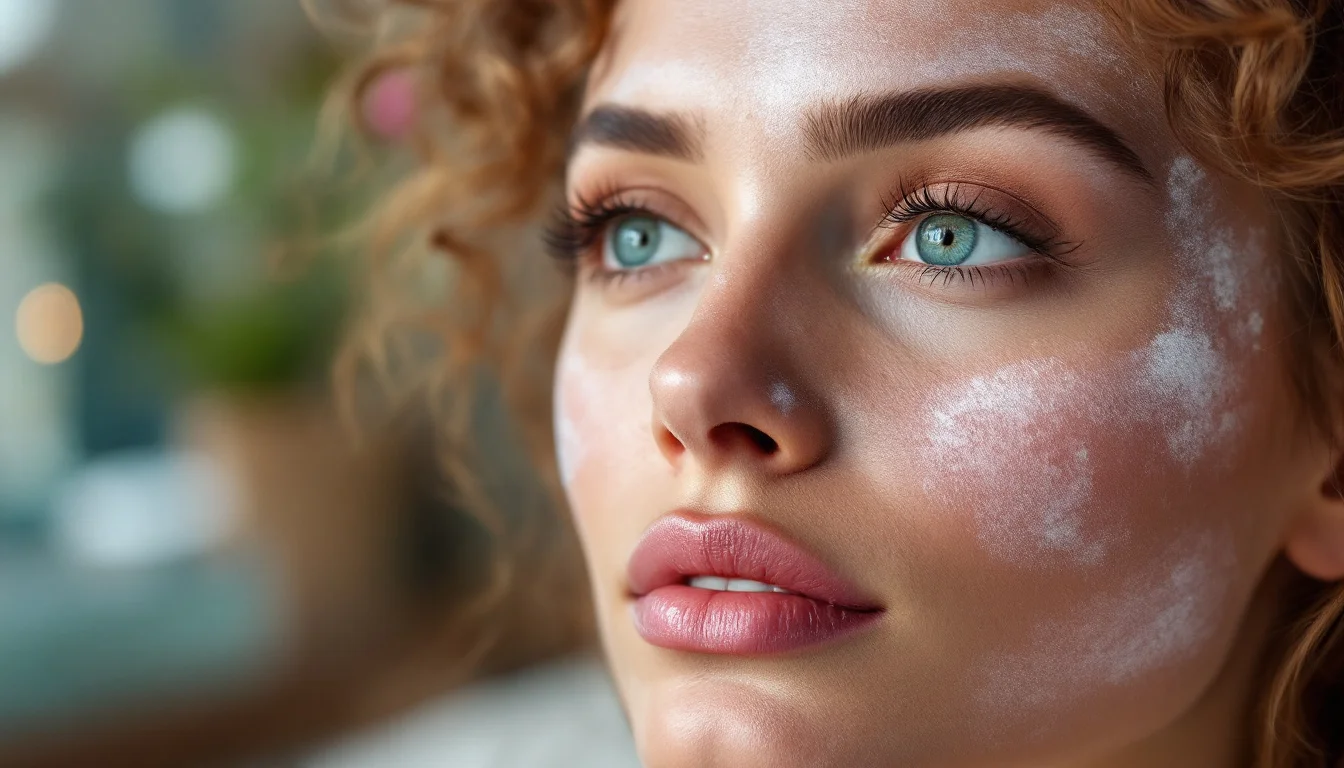
Historically, the answer to this need for visual readability and heat resistance was the heavy use of pressed powders and drying cosmetics. However, relying on these classic protocols now often produces the exact opposite of the desired effect. Using exclusively powdery or highly mattifying foundations requires caution on mature skin: while they may help combat sweat under the hot lights, according to makeup artist Louise Wittlich (louiselouise.com), they can make the skin look parched and significantly highlight fine lines. As a result, professionals often opt for long-wearing, semi-matte hybrid formulas. This intersection—between the need for controlled textures with reliable staying power under the lights and the limitations of traditional mattifiers on aging skin—defines the great paradox of modern stage prep.The Complexion Protocol: Ditching the "Mask" for Fluidity
An Essential Pre-Assessment
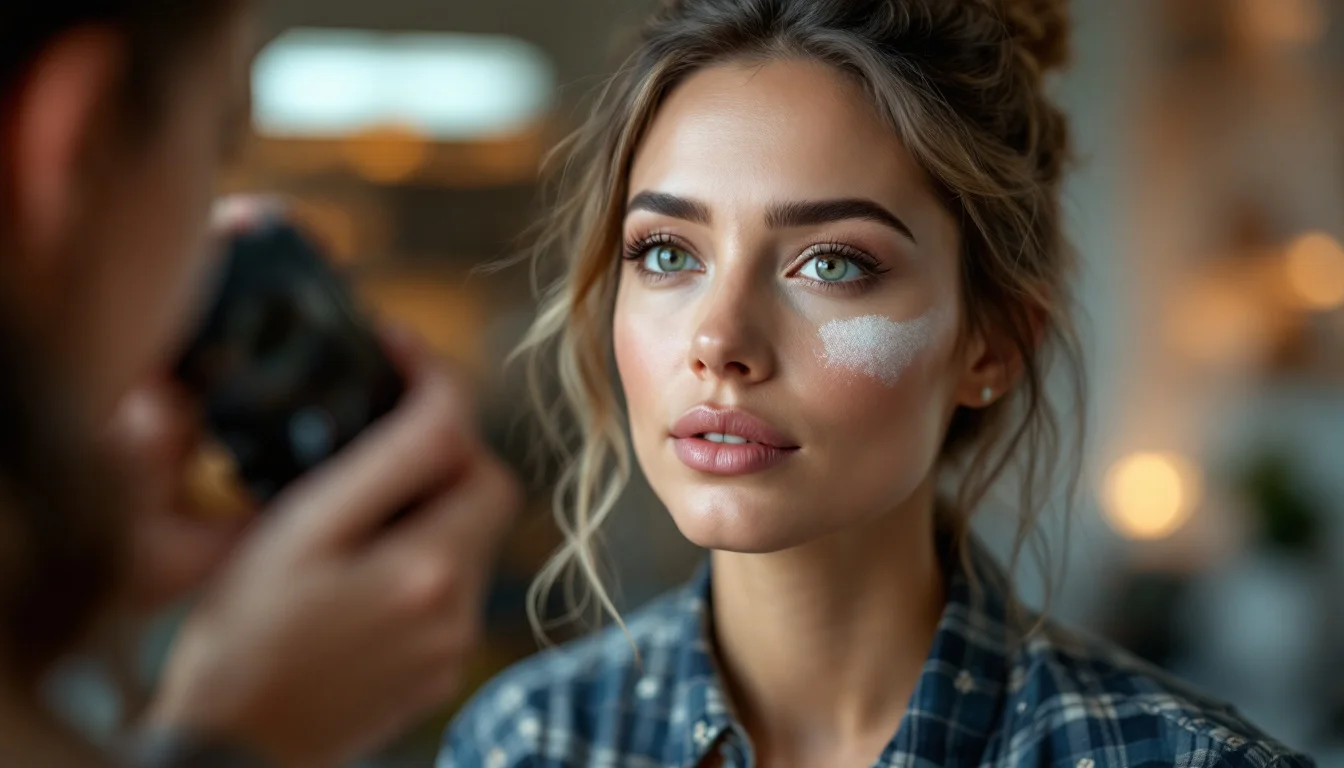
Even before opening a palette or applying the first layer of primer, the dressing room prep phase dictates the success of the final look. Given the skin variations caused by age and the exhaustion of touring, the one-size-fits-all approach to foundation is obsolete. There is no "magic potion"—skincare must be tailored to each individual based on specific concerns like dryness, breakouts, or fine lines. This means clearly identifying your own needs before the beauty routine even begins.The Supremacy of Fluid, Hydrating Formulas
Once targeted hydration is complete, selecting coverage products means leaving behind classic theater standards, which are often far too dense. For mature skin, the secret lies in creamy, hydrating products that avoid a dry, caked-on finish. Switching from powder to cream restores the face's vitality without catching the light in a flat, static way. Keeping this lighter approach in mind, experts favor "light as air" illuminating primers, cream blushes, and ultra-lightweight, feather-effect mascaras to ensure a glowing complexion throughout the performance.The Art of Stage Blending
Having the right fluid emulsions isn't enough if your application technique remains rigid. The transition to hydrating products requires a specific approach, especially under followspots that instantly expose the slightest unblended color line. The recommended application technique for mature skin is continuous blending: softness and a seamlessly diffused finish always take precedence over harsh lines. By building the product in sheer, successive layers, the performer ensures their expressions remain readable without trapping their primary acting tool beneath an impenetrable mask.Sculpting Volume From a Distance Without Hollowing Features
Structural Analysis of the Stage
A face's impact on stage is never isolated; it is always part of an overall production framework. The final result of a stage makeup look depends on four factors: distance, lighting, movement, and costume. The goal of analyzing these beforehand is to achieve makeup that is readable, expressive, and cohesive with the world of the show. This method allows actors to precisely calibrate how much morphological enhancement they actually need.Rebalancing Theatrical Chiaroscuro
To counteract the flattening effect of top lighting, the makeup artist or performer must artificially recreate the face's depth. Essential stage makeup techniques include enhancing volume and playing with highlights and shadows under the lights. This is the foundational principle of contouring, which is absolutely vital for existing visually from a distance.However, the specific needs of a face over 40 demand a more moderate approach to this dramatic enhancement. For the cheeks, it's crucial not to over-sculpt if they are already naturally hollow, as this risks making the character look exhausted. The artist must therefore place their shadows in a very contained manner, avoiding heavily darkening the lower cheekbone hollows, to preserve the vital roundness and youthfulness required by the staging.
The HD Gaze: Managing Textures Under Stage Lights
Mastering Eyeshadow Optics
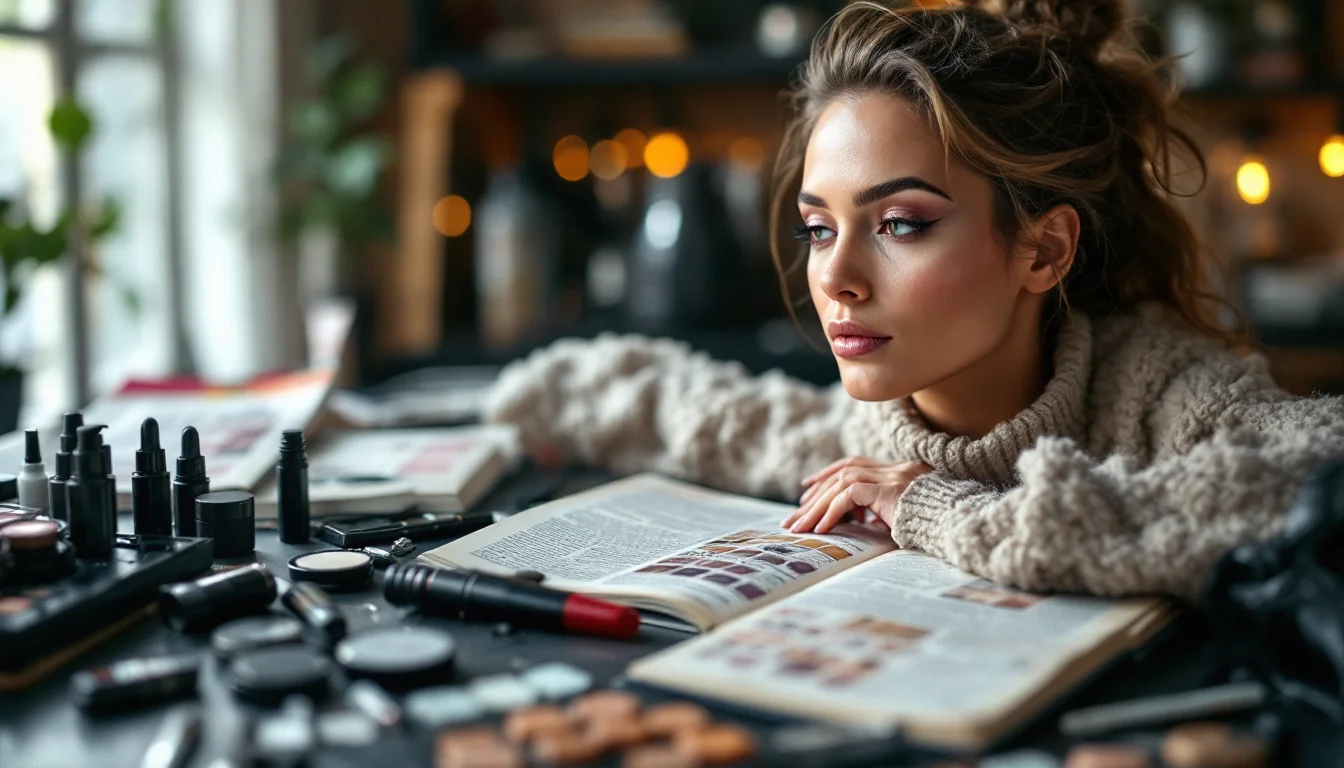
The delicate skin of the eyelids immediately betrays the use of unsuitable cosmetics under intense lighting. Choosing the right eye finishes boils down to the rules of optical refraction.| Eyeshadow Finish | Optical Effect Under Lights | Impact on Fine Lines | Stage Recommendation |
|---|---|---|---|
| Matte and velvety | Absorbs overhead light | Blurs and softens fine lines | Recommended as a structural base |
| Pearlescent or metallic | Creates a continuous flash of light | Exaggerates texture in close-ups | Not recommended for HD TV, but useful in theater from afar |
| Glittery | Fractured sparkle in motion | Risk of emphasizing texture depending on particle size | Usable with finely milled textures based on costume needs |
How glitter performs depends heavily on the fineness of the particles: while larger, craft-style glitters are likely to physically gather in creases, finely milled, mica-based glitters remain perfectly usable on mature skin, particularly for musical theater.
Opening Up the Eyes From Afar Without Overloading
Beyond eyeshadows, the curl and volume of the lashes need to carry the expression. A pro trick for opening up the eyes is to gently warm the eyelash curler with a hairdryer before use to intensify the curl. It's imperative to test the temperature on the back of your hand first to avoid burning the delicate eyelid skin or weakening the lash keratin. When applying mascara to mature skin, the technique also shifts: focus on the base of the lashes for a volumizing effect, but avoid overloading the tips to keep them from dropping under the weight.Lips and On-Set Logistics: Anticipating Show Duration
Reshaping Lip Structure for the Auditorium
Under strong lights, the mouth tends to visually fade away—a phenomenon amplified as lips naturally thin with age. The choice of shade and the lip line therefore become purely strategic. Very dark lip colors make the mouth look thinner by absorbing light, a shrinking effect that doesn't necessarily apply to intense or bright matte reds, which can actually help structure the lips. To maintain presence from afar without hardening the expression, thin lips can be discreetly enlarged with a lip liner drawn just outside the natural color border. This slight overlining restores the surface area of the mouth without creating a heavy, visible outline for the front rows.Thermal Management and Backstage Touch-Ups
Switching to hydrating formulas across the entire face introduces a much higher thermal vulnerability than older methods. Consequently, stage makeup must seamlessly adapt to production constraints—including the show's timing, lighting intensity, and the heat of the costume—while always factoring in time for touch-ups. A quick check between acts allows performers to re-blend any cream products that may have migrated with sweat, preserving the clarity of the character from the beginning to the end of the event.Frequently Asked Questions (FAQ) About Mature Stage Makeup
How can I refresh my makeup at intermission without ruining the hydrating textures?
If the stage is excessively hot, an ultra-targeted sweep of powder solely on the sweaty areas stabilizes any fluids displaced by perspiration. This prevents locking down the eye contours or cheeks into a rigid mask, and avoids the need to pile on extra layers of liquid product.Do male actors over 40 need to follow the same texture rules?
Absolutely. Ditching heavy mattifiers applies to all performers facing high-definition lenses. Using lightweight primers and well-blended creams prevents product from settling into masculine expression lines, ensuring a highly natural presence on camera.Does the hairdryer trick for the eyelash curler pose a burn risk?
It is vital to check the metal's temperature on the back of your hand before bringing it near your eyelid. The goal is just to achieve a gentle warmth to soften the lash keratin and optimize the curl, not to make the tool scalding hot.Conclusion: From Concealment to Mastering the Light
Prepping a performer or public speaker who has crossed the forty-year mark represents a definitive technical break from the automatic routines of their early career. Replacing intensive powdering with lightweight, fluid emulsions isn't a surrender to the demands of live performance, but rather an evolution toward a more refined manipulation of stage lighting. By focusing on targeted contrasts and respecting the skin's need for hydration, the entertainment professional stops fighting the heat of the spotlights with thick layers of makeup. This new approach proves that the presence and readability of a performance now lie in the smart choice of textures, treating the audience to a face where every single micro-expression is beautifully preserved.