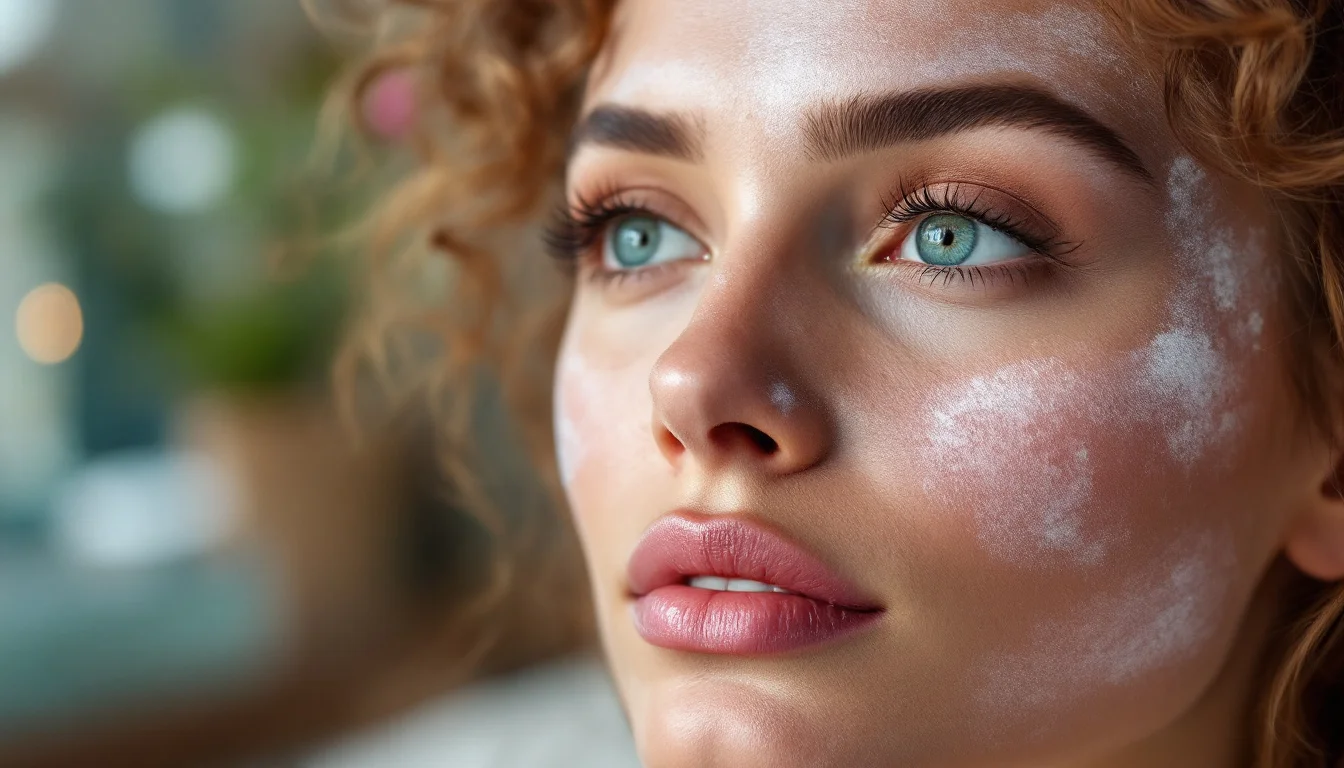
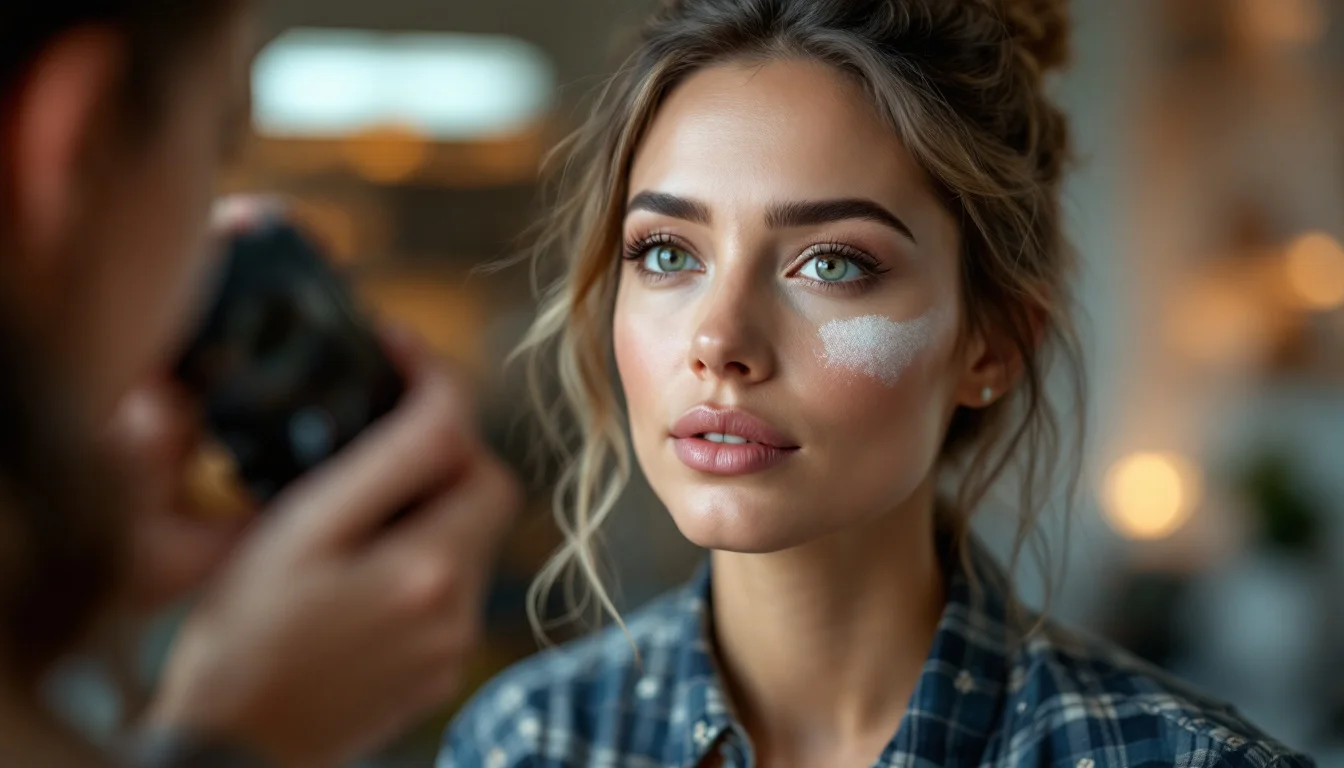
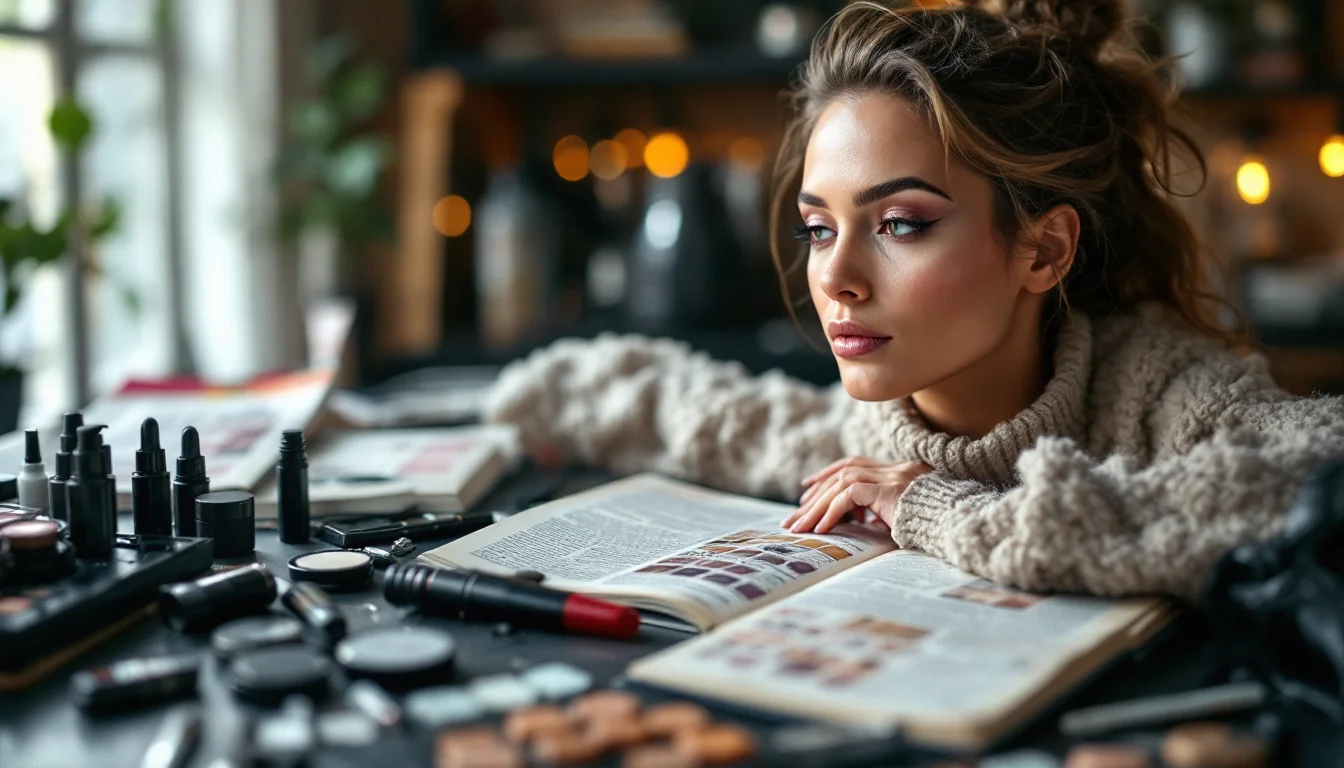
Stage Contouring: Camera-Ready Makeup for Live Performances
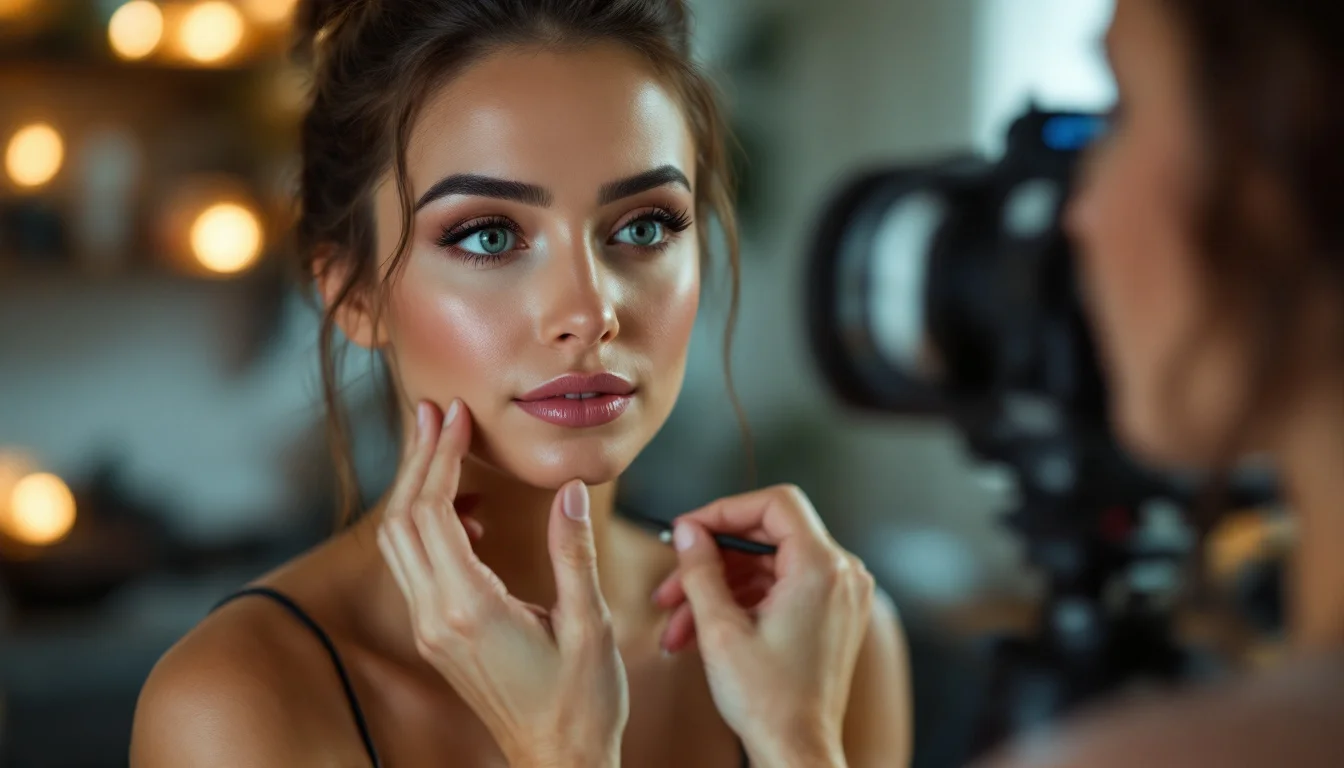
For musicians, performers, and independent artists, intimate live recordings are changing the way they prep in the dressing room. Small stages filmed up close present a unique technical challenge: everyday makeup is rarely a match for harsh spotlights, while traditional stage makeup often creates an unflattering mask-like effect on screen.
Faced with cameras that capture every detail and lights that wash out the face's natural contours, a hybrid approach is essential. The solution lies in tailored contouring—borrowing the three-dimensional sculpting of theater makeup, while using a hybrid finish (matte in the center, luminous on the high points) combined with the heavy blending typical of television studios.
This method requires adapting your makeup kit, tools, and shading techniques to survive the high-pressure environment of a close-up shoot.
Key Takeaways
- Opt for a matte base in the center of the face to minimize shine.
- Use the three-shade method to structure the face.
- Blend seamlessly to avoid a mask-like effect on camera.
- Test your makeup under stage lights before the big day.
1. How do wide-angle lenses redefine makeup for small stages?
Using a 24mm lens perfectly illustrates the tension between cramped stage spaces and the need for a flawless look. This setup combines the extreme spatial constraints of a close-quarters shoot with the strict matte finishes and seamless blending required by high-definition cameras.
How motion flattens the image
Limited space often dictates equipment choices, which directly impacts how facial features are captured. During a live performance shoot in Spain by the duo The Movement for a Nikon series, the available workspace was less than five meters. To get close to the artist while keeping the two directors, the moving gaffer, and the set in frame, the team had to use a NIKKOR 24mm f/1.4G ED lens.
This technical choice presented a major visual challenge. Right from their first test, the directing duo noticed that the interplay between this specific lens, the lighting, and the camera movement around the artist significantly altered how facial volume was perceived. To compensate for this flattening effect, they had to implement much more intensive camera choreography.
The need to adapt
This optical phenomenon explains why classic theatrical makeup fails at close range, and why it is absolutely essential to manually recreate definition on the face.
Industry professionals now incorporate this constraint into their curriculum. Various specialized schools offer specific training in stage makeup, strongly emphasizing the need to adapt techniques to different types of shows—from theater and dance to performance art. This approach highlights the importance of understanding the combined impact of shooting distance, intense lighting, constant movement, and costumes on the final look captured by the lens.
2. How do you prep your complexion to withstand harsh front lighting?
Even before contouring, prepping your complexion is the critical foundation for withstanding close-up lighting. It is at this stage that the harsh lights of a set will do the most damage to an unprepared face.
The golden rule: a matte finish
To brave bright lights without looking shiny, it helps to borrow from the standards of the television industry. According to the beauty blog Bright Beauty Vanity, which offers tips on TV studio makeup, a TV-ready base must always start with a matte-finish foundation. This finish is specifically designed to minimize the shine caused by intense lighting. A concealer is then added to cover dark circles and minor blemishes that high-definition cameras would otherwise amplify.
The three-shade method
To build dimension right from the foundation stage, the stage method described by the magazine Danses avec la plume relies on a fundamental trick: adding two extra foundation shades to your kit.
- A foundation lighter than your natural skin tone, applied to the areas most exposed to light.
- A darker foundation, reserved for shadowed areas.
Strategic powdering
Setting this base is a rigorous process. For the stage, powder is applied by gently pressing a powder puff over the entire face. Priority should be given to the areas most likely to shine under the spotlight, namely the "T-zone" (forehead and nose), followed by the chin. Finally, a soft, wide, and flat brush is used to delicately sweep away any excess powder, ensuring the skin stays matte without looking stiff or cakey.
3. How do you rebuild facial volume without looking like you are wearing a mask?
Under intense lighting that can wash out natural features, contouring and highlighting techniques are used to bring new dimension to the face. In stage makeup, contouring is defined as the technique used to accentuate features by playing with light and shadow (chiaroscuro).
The mechanics of light and shadow
The core principle involves creating areas of shadow by darkening the hollows of the face, and areas of light by brightening specific strategic spots. This optical illusion is generally achieved using bronzer, specific contouring products, and a highlighter.
Highlighter must be mapped out precisely to catch artificial light:
- On the highest, most prominent part of the cheekbone, blending upwards.
- Under the brow bone and in the inner and outer corners of the eyes to open up the gaze.
- Along the edge of the upper lip (the Cupid's bow) for a plumping effect.
- Down the bridge of the nose to slim it.
Adapting to different shooting contexts
The following table illustrates how to adjust these techniques based on the performance environment.
| Visual Context | Base Finish | Contrast Level | Blending Requirement |
|---|---|---|---|
| Classic Stage (Theater) | Heavily powdered and set | Very high (dramatic effects) | Low (distance softens features) |
| TV Studio | Strictly matte | Light to medium | Very high (fixed HD cameras) |
| Filmed Small Stage | Hybrid (matte center, luminous high points) | Medium to high (to counter wide angles) | Maximum (camera circles the artist) |
The primary goal of contouring for intimate live setups is to highlight the areas most exposed to the spotlights and slim down features like the nose, chin, and perhaps the forehead, all while masking imperfections without leaving any harsh, geometric lines.
4. Which brushes and techniques should you choose for your face shape?
Pulling off a camera-ready contour relies just as much on choosing the right brushes as it does on adapting your technique to the artist's bone structure.
Choosing brushes based on product texture
To avoid harsh, unflattering lines, tools must be selected with care. The best tool for precise contour lines is a medium-sized angled makeup brush, while a smaller version should be used specifically for applying concealers and color correctors.
The cosmetics brand KIKO recommends paying close attention to bristle type based on the product being used:
- Synthetic bristle brushes are recommended for applying liquid or cream foundations.
- Natural bristle brushes are typically recommended for powder foundations and powder blushes, though high-quality synthetic fibers can also be highly effective at picking up and distributing these textures.
Structuring based on face shape
The application of bronzer (usually one or two shades darker than your skin tone) should follow the natural shape of the face.
For a long, slender face, the standard method is to sweep bronzer horizontally across the forehead at the hairline, as well as under the jawline and chin, to visually shorten the features. You should then highlight the temples, the tops of the cheekbones, the bridge of the nose, the jawline, and the Cupid's bow, before warming up the hollows of the cheeks with a touch of blush.
For a round face, the approach is different. It is best to apply bronzer along the sides of the face, starting from the temples and blending down toward the jawline, before emphasizing the hollows of the cheeks to artificially sculpt the center of the face.
5. How do you balance makeup for the visual style of the shoot?
Balancing the colors and the intensity of your sculpted features depends directly on the video's art direction.
From news broadcasts to pop performances
For television news or intimate interview shoots, a more natural look is highly appropriate. This means using light contouring and opting for subtle shades on the eyes and lips. It is a delicate balance: you must ensure the makeup remains visible and structured enough so you don't look completely washed out under powerful front-facing spotlights.
Conversely, for shows or performances with a decisively glamorous vibe, the recommendations are dialed up. In these cases, it is advisable to go for much bolder eye makeup and a highly pigmented lipstick. This style is often paired with vibrant eyeshadows and a strategically placed touch of glitter to catch and reflect the light as the artist moves.
Preparation is key
Regardless of the chosen art direction, stage contouring requires practice. In fact, it is strongly advised not to test this complex technique on the day of the show or shoot if you haven't practiced it beforehand. This precaution saves you from unnecessary stress mere minutes before going live.
Conclusion: A technical skill for the modern artist
Mastering facial volume for professional camera lenses is an invaluable technical asset for live performances. This technical know-how goes far beyond mere beautification: it requires a keen awareness of space, focal lengths, and light diffusion on set. Adapting to these extreme constraints is the first step toward a successful stage presence. Therefore, artists should make it a habit to always include a camera test during their lighting checks to validate their look before the final shoot.