How to Adapt Your Stage Makeup for Daytime Outdoor Performances
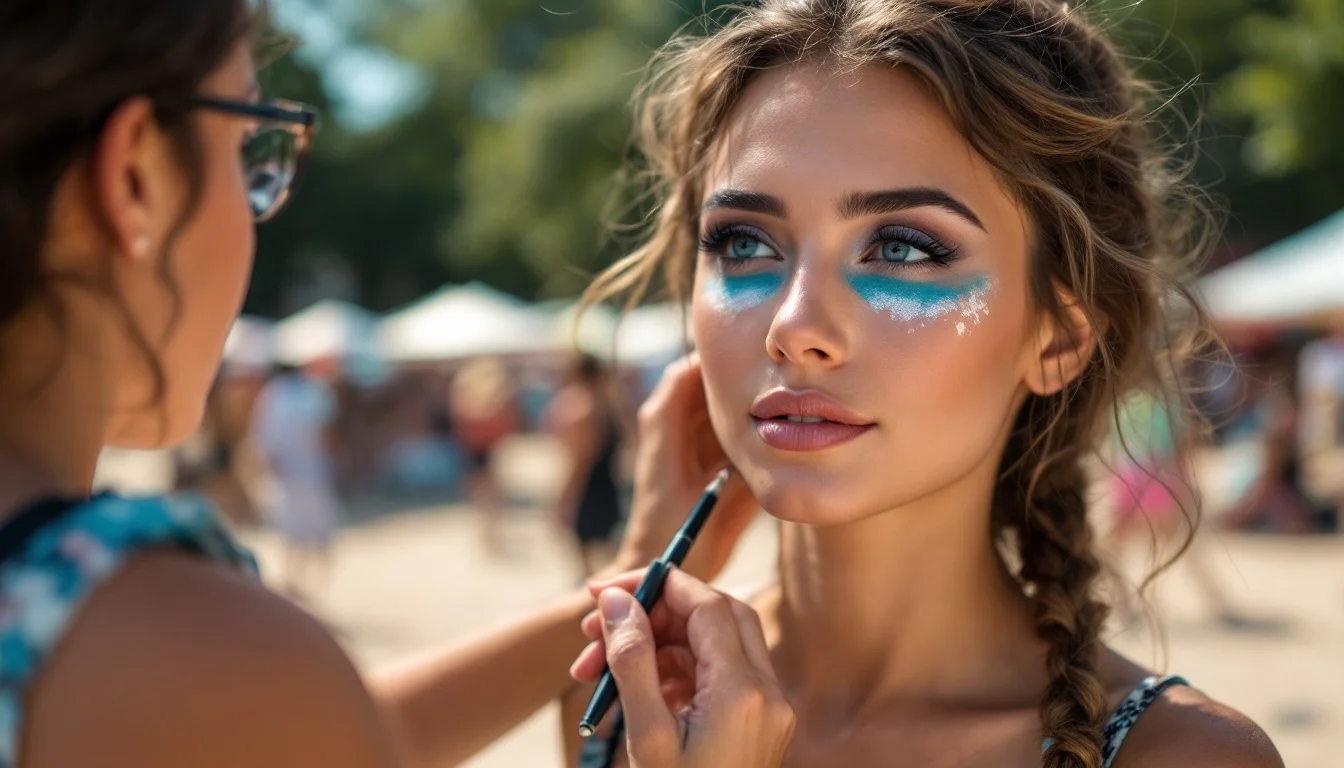
Performing outdoors poses a biomechanical challenge for the skin. Unlike traditional concert halls, which are typically dark and air-conditioned, summer festivals expose artists to a demanding combination: high midday sun, crushing heat, and constant humidity. As the dance publication Pointe Magazine clearly highlights in its article "Sweat-Proof Your Stage Makeup," perspiration can literally ruin stage makeup, whether that sweat is brought on by summer heat or the intense temperatures of hot stage lights.
The stakes are high for performers. For example, at major events like Rock Werchter, which features multiple outdoor daytime stages, tens of thousands of festival-goers attend daily, depending on the year. In front of such a massive audience, and under natural light that highlights every textural flaw, thick layers of theatrical foundation quickly turn into a visible, melting mask.
Rethinking your entire beauty routine becomes essential for outdoor sets. The goal is no longer to layer opaque products, but rather to choose formulas and application techniques designed to guarantee maximum grip while keeping the visual finish light.
Key Takeaways
To brave the extreme conditions of a summer festival, your application strategy needs a complete overhaul:
- Lighten the eyes: Ditch heavy concealers in favor of tinted hydrating formulas to prevent the product from creasing and cracking.
- Optimize grip: Apply long-wear foundations on skin that has fully absorbed its moisturizer.
- Structure your color: Drastically soften your eyebrow shade to counteract the harshness of daylight and adjust your blush placement.
- Manage lip longevity: Carefully prep your lips by removing any oily residue before applying lipstick to maximize its staying power.
Theater vs. Outdoor Festival
Transitioning from a theatrical stage to an open-air festival requires a radical shift in both texture and placement. Techniques that work under distant spotlights often become problematic under the harsh glare of the summer sun.
This table summarizes the necessary structural adaptations for three critical areas of the face, based on specialized prep protocols.
| Facial Zone | Climate and Lighting Constraint | Technical Adaptation Solution |
|---|---|---|
| Eye contour | Cracking due to heat and dryness | Replace heavy concealer with a tinted moisturizer. The lighter formula lets the skin breathe and is less likely to cake. |
| Cheekbones and cheeks | Natural light creating harsh contrast (clown effect) | Place blush along an imaginary line from the bottom of the nose to the top of the ear, keeping it toward the back of the face ("10 performance makeup tips to ease your onstage look", Dance Informa). |
| Lips | Product transfer onto the mic or costumes | For creamy formulas, place a single-ply tissue over the mouth, then set by tapping with a powder puff and loose powder. |
Strategic Application
These adjustments all serve the same imperative: reducing the overall thickness of your cosmetics. By swapping out pasty textures for more fluid alternatives, and by shifting color accents toward the perimeter of the face, the skin retains its mobility. This allows sweat to evaporate without cracking the makeup's surface layer, ensuring you look fresh from the first song of the set to the last.
How to Survive Sebum Without the Mask Effect
Creating a heat-resistant complexion relies on a paradox: you must use mattifying, long-wear products, but apply them in a way that mimics natural hydration (the highly sought-after dewy effect, a luminous and moisturized look).
The Application Window
Skin prep dictates the longevity of the finish. Long-wear foundations can withstand hours of sebum production, but applying them requires precise timing. It is best to apply them only once your moisturizer has been fully absorbed. This precaution prevents the film-forming formula from being diluted, ultimately offering optimal adhesion to the skin.
Anchoring Your Base
To maximize this grip without adding weight, primer plays a fundamental role. An all-over face primer, or a tinted primer, should be applied right before a matte foundation. This undercoat significantly improves overall wear time while intensifying the pigment. By combining a gripping primer with a long-wear foundation applied over a still-flexible base, the performer achieves coverage that moves with their facial expressions rather than cracking under pressure.
Why Setting Spray Should Be Layered
In the collective imagination, setting spray is much like hairspray: a quick final mist right before hitting the stage. In reality, when dealing with daytime festival temperatures, this surface-level method falls short. The spray needs to be integrated directly into the construction of your complexion.
Layering (Building by Layers)
Setting spray isn't just for the end of your beauty routine. It can, and should, be used at multiple intermediate stages of your makeup application. This stratification technique seals in every creamy or powdery texture before the next one is added. However, caution is required: never powder an unblended eyelid crease, as the powder will lock the flaw in place rather than fix it. Products (primer, foundation, shadow) absolutely must be seamlessly tapped into the eyelid and under-eye area before applying your colors.
Activating Your Tools
The most technical trick involves modifying the load on the brushes themselves. Spraying setting spray directly onto the brush before picking up a product like cream contour transforms the cosmetic's consistency. This interaction delivers a more intense pigment application while guaranteeing better longevity. The product fuses more intimately with the skin rather than just sitting on top of it, making it much more sweat-resistant.
How to Adapt Blush and Colors for Natural Light
Artificial theater lighting washes out colors, traditionally forcing performers to over-exaggerate their features. Outdoors, the sun has the exact opposite effect: it saturates contrasts and instantly hardens lines. A colorimetric overhaul is essential.
Placement for Dimension
Color placement needs to change. To sculpt the face without looking artificial, blush application should simply focus on restructuring the outer perimeters, avoiding any heavy concentration of product in the center of the cheeks.
Softening the Eyes
Eyebrows bear the brunt of the sun's impact. A stark black or warm brown drawn-in brow, common on an indoor stage, turns into a severe geometric block in daylight. For stage brows, experts recommend choosing a shade that isn't too dark, completely devoid of any red undertones (leaning towards taupe or gray), and, most importantly, a few shades lighter than your natural hair color. It is the only way to achieve the most natural look possible when the artist is broadcast in close-up on the festival's giant screens.
How to Avoid Lipstick Transfer on a Mic
Lip makeup highlights a major concern for singers and musicians wearing headset microphones: color transfer. Summer heat softens traditional waxes, making standard lipsticks much less stable.
The Threat of Oils
The natural oils found in makeup remover wipes, certain nourishing face primers, and moisturizers can be enough to break down lipstick prematurely. Even the slightest trace of lip balm left in the corners of the mouth can compromise the staying power of a matte formula.
Mechanical Prep
To guarantee a flawless pout despite sweating and mic friction, the area must be mechanically dried out. It is advisable to rigorously exfoliate the lips with a damp towel or washcloth prior to any application. This friction removes dead skin and, more importantly, purges the surface of any oily residue. Once the skin is bare and matte, relying solely on a long-wear liquid formula, or applying a creamy lipstick followed by the powdered tissue technique, will help seal the color for the duration of the performance.
Post-Concert Deconstruction: Hygiene and Skin Barrier Protection
After an hour spent sweating under occlusive textures, returning to the dressing room marks the beginning of an equally crucial process: dismantling the stage mask. The combination of sebum, sunscreen, setting sprays, and festival dust demands a cleansing method that is tough on dirt but gentle on the skin barrier.
The Double Cleanse
Removing performance makeup must absolutely begin with a cleansing oil. The oil breaks down the resistance of waterproof products. This step should be followed by a double cleanse using a gentle foaming cleanser to wash away sweat and oily residue. Moreover, never neglect the neck—an area where makeup often drips—before intensely rehydrating the skin before bed.
Sanitizing Your Tools
Summer heat encourages bacterial growth in makeup bags. Tool hygiene is non-negotiable if you want to avoid breakouts mid-tour. Washing brushes at least once a week is imperative. More specifically, foundation brushes and makeup sponges should be thoroughly washed after every single use in a festival environment.
Conclusion
Adapting to summer stages is no longer just about choosing colors; it requires a genuine understanding of cosmetic formulas. Faced with extreme temperatures, the traditional approach should make way for a more engineered, lightweight technique: oil-free skin prep, strategic layering of setting agents, and opting for muted shades.