Graphic Stage Makeup: New Techniques
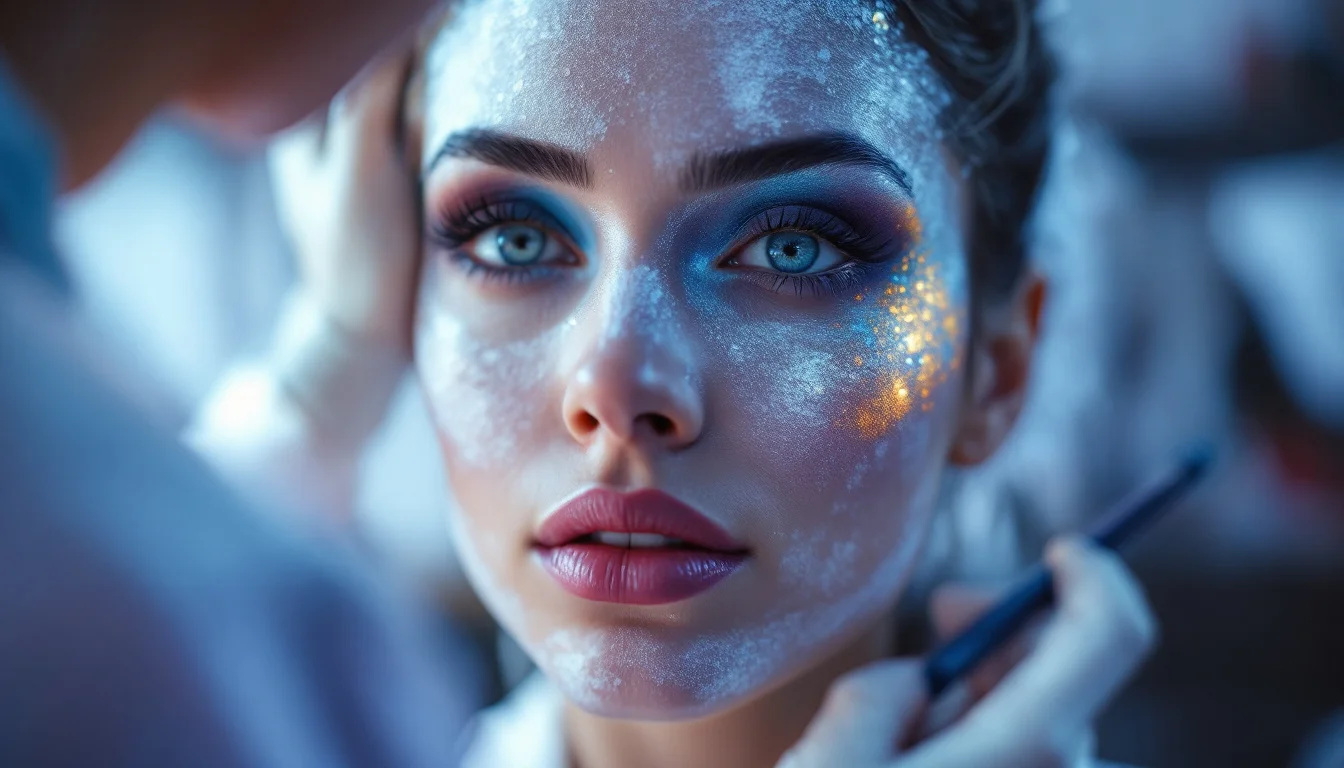
Stage makeup has long followed an unwritten yet universally accepted rule in the dressing room: to make a look withstand the heat of the stage lights and heavy perspiration, you had to pile on the layers. Thick primers, excessive amounts of loose powder, and harsh setting sprays formed an essential suit of armor for musicians and performers. Today, this approach is slowly being left behind. The creation of graphic shapes and bold geometric lines now relies on advanced chemical formulations, where modern application techniques prioritize efficiency over thickness.
Key Takeaways:
- The shift away from tedious routines and the "no-makeup makeup" aesthetic in favor of high-performance formulas.
- The growing use of hybrid textures that transition from a cream to a soft-focus powder finish.
- A two-step technical application process utilizing dual-ended brushes.
Why is the mask effect being gradually abandoned?
Expectations for cosmetics have evolved drastically, driven by increasingly demanding real-world conditions. Shoot days are getting longer, outdoor festivals expose artists to unpredictable weather, and filmed content demands continuous visual perfection.
The decline of complex routines
The industry is seeing a clear shift away from tedious rituals. Overly complicated makeup routines—symbolized by the era of 10-step regimens or "no-makeup makeup" approaches that ironically require a multitude of products—are declining significantly. According to the industry platform Beauty Independent, this drop is driven by growing economic pressures, a glaring lack of time backstage, and, above all, a demand for genuine product performance. Performers want results that won't melt off during their first choreography. Despite this pressure and the demand for a back-to-basics approach, the sector is adapting successfully: market analyses reported by the publication indicate that the makeup category is maintaining overall growth momentum, both in prestige and mass-market retail channels.
The rejection of short-lived formulas
This need for raw efficiency translates into a shift in formulation. Brand executives and founders confirm that full-coverage formulas, which are traditionally heavy and "mask-like," are losing ground. They are giving way to softer, healthier finishes that respect the skin's natural texture while still providing a protective barrier.
The longevity of graphic makeup relies less and less on product saturation, and more on chemical stability. It is also increasingly noted that consumers are rejecting makeup that barely "works" for an hour before falling apart in the real world. Faced with unpredictable weather and longer working days, reliability is paramount. A geometric eyeliner or color block simply cannot afford to crack under the strain of facial expressions, rendering the old mask effect not only uncomfortable, but technically flawed.
How to apply long-wearing graphic makeup with hybrid tools?
To achieve crisp graphic lines capable of surviving a performance, makeup artists are turning to a new generation of cosmetics. The challenge is being able to blend and work the product fluidly to create complex geometric shapes before it sets.
The rise of transformative formulas
The core technological solution lies in evolving textures. Hybrid base formulas—whether blush, concealer, or foundation—that start off as creams and dry down to a soft-focus powder finish are surging in popularity. These products offer both the seamless blendability essential for artistic creation and formidable longevity. On stage, the "soft-focus" finish is often formulated to minimize unwanted glare under the spotlights while aiming to lock pigments firmly in place.
Applicator engineering
However, a cutting-edge formula is nothing without the right delivery system. The application tool now counts just as much when evaluating a cosmetic formula, underscoring the vital importance of mechanical technique. Dual-ended complexion brushes—featuring one side optimized for picking up and laying down cream textures, and another dedicated to diffusing, buffing, or setting—are proving exceptionally well-suited for the task. This hardware evolution is now widely recognized: multiple trade publications and industry experts regularly highlight these double-ended brushes as top-tier tools, proving that the applicator is no longer seen as a mere optional accessory.
The combination of these technical brushes and cream-to-powder hybrid textures operates in two simple steps, making them particularly ideal for graphic stage makeup:
- Application (Dense brush head and cream texture): The firmer side of the dual-ended brush is used to pick up the hybrid product in its creamy state. This consistency allows for tracing precise geometric edges, correcting vanishing lines, and seamlessly blending colors with the perfect slip.
- Finishing (Fluffy brush head and powder conversion): As the formula dries down and transforms into a soft-focus powder finish, the wider, more airy side of the brush comes into play. It smooths out micro-creases and buffs the surface without shifting the pigment, locking the design into the skin without requiring a heavy setting spray or an extra layer of loose powder.
How does the field validate professional makeup techniques?
While product chemistry and brush ergonomics are great in theory, the harsh realities of festivals and big tops demand validation in the field. In Belgium, professional training programs integrate this environmental and time pressure directly into their curriculum, preparing future artists to operate under extreme conditions.
Versatility in the face of artistic demands
In Liège, the Institut de Techniques Artisanales (ITA) perfectly illustrates this comprehensive approach. The institution describes its Make Up Artist track as a spectrum covering everything "from natural beauty looks to the most daring artistic creations." The program covers techniques for fashion, stage, and screen. This holistic vision confirms that mastering graphic performance makeup requires a solid technical foundation capable of withstanding the physical wear and tear of an intense performance.
The field as the ultimate judge
Validating a long-wear makeup look doesn't happen in the quiet of an air-conditioned studio, but in the organized chaos of backstage. The Tagnon school, a highly respected institution in the field, confronts its students directly with this reality. This intensive 10-month program covers fundamentals like color theory, morphology, and adapting techniques for all skin tones. The curriculum also integrates specific theater and film techniques, developing advanced special effects skills such as aging makeup, applying hairpieces, creating prosthetics, and face casting.
During practical exercises, future professionals must juggle multiple constraints: dealing with the unexpected, handling stress, and managing tight timelines, often having to prep several models in a very short window.
To ensure these precision techniques survive the worst conditions, makeup artist students from the Tagnon school collaborate with high-profile partners. They work in the field with organizations like Arte Corpo, Pairi Daiza park, and Cirque du Soleil, as well as various theater companies and major events like the Dour festival. Operating backstage at a summer festival or prepping acrobats under a big top means battling dust, humidity, and high temperatures. It's in these exact contexts that the new cream-to-powder hybrid formulas prove their true value, allowing artists to perform without a second thought about the integrity of their visual look.
The gradual disappearance of the mask effect in favor of more chemically stable formulas is profoundly changing the way artists prep for tours and performances. By mastering the transition of hybrid textures and the mechanics of dual-ended tools, backstage teams are saving precious minutes while helping to preserve an optimal visual appearance under the spotlights.