The Optical Illusion of the Stage
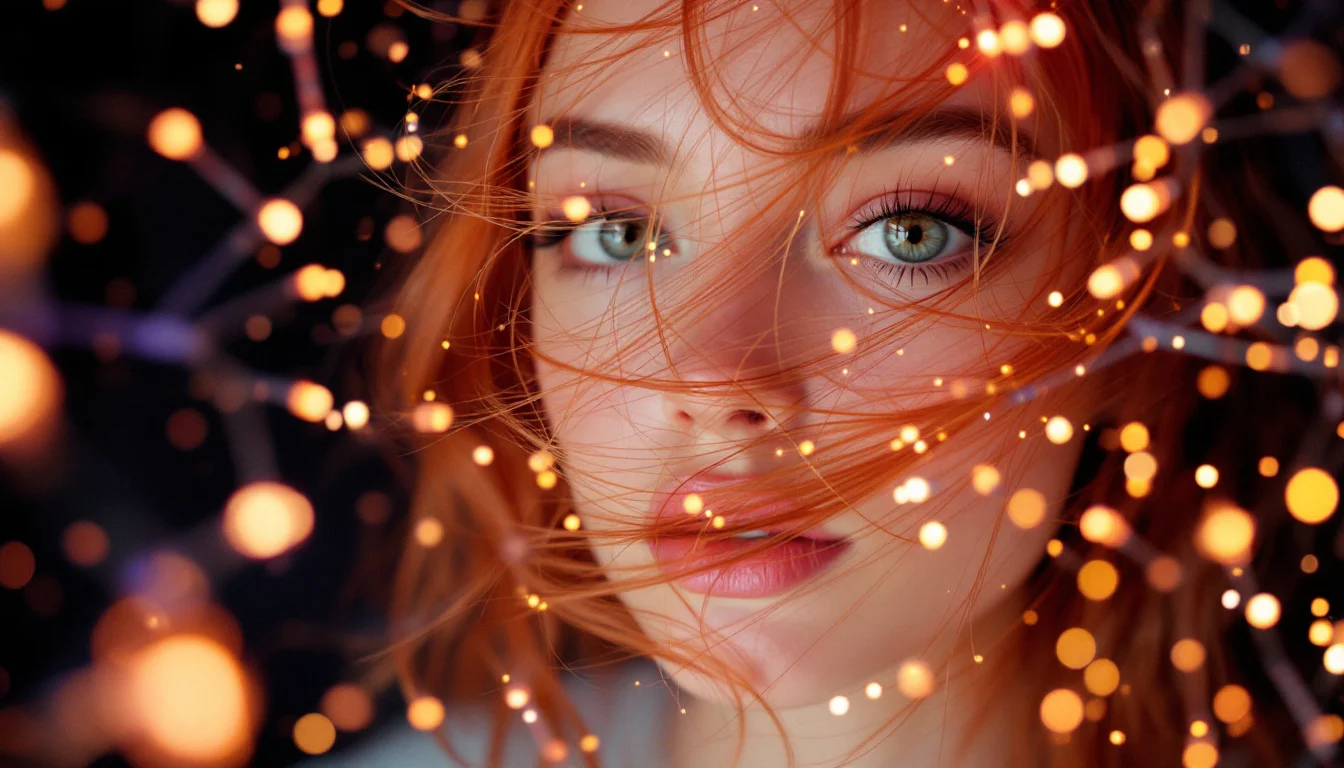
When an artist steps into the spotlight, the meticulous preparation done backstage is suddenly put to an optical test. The audience observes a silhouette, a face, and a mane of hair whose shade seems perfectly defined. Yet, this perception is fleeting and entirely dependent on the technical choices of the stage design. Hair acts as a reflective surface, bouncing specific wavelengths back toward the venue or the cameras.
The technical explanation for this phenomenon is somewhat counterintuitive. According to the Dreamhouse Beauty blog, it isn't the hair itself that changes color: it's the light illuminating it—and therefore the color that the eye or camera perceives. Activating a new bank of lights can completely transform a shade. To master their visual identity in front of an audience, an artist must understand that their hair color is merely one variable in the broader lighting equation of a concert.
Key Takeaways
- Shade Vulnerability: Hair color can appear warmer, cooler, lighter, darker, or flatter depending on ambient lighting—an effect that is especially noticeable on blondes, highlighted hair, silver and gray tones, as well as other multi-tonal shades.
- Color Temperature: Stage lighting varies in color temperature, measured in Kelvins (K). Warm light typically ranges from 2,700 to 3,500 K (yellow/orange), while cool light spans from 5,000 to 6,500 K (blue/white).
- Accurate Rendering: For an accurate color representation (closest to natural daylight), a temperature of 5,500 to 6,500 K is recommended. Light intensity tailored to the stage is also essential to ensure proper visibility in a performance setting. Light sources with a high Color Rendering Index (CRI) help maintain the true vibrancy of pigments.
The Physics of Color: Why an Artist's Hair Identity is in Flux
Hair Fiber as a Projection Surface
On stage, hair ceases to be a static pigment and instead becomes a projection surface. The colorimetry perceived by the audience is the result of a direct interaction between the hair's texture and the photons emitted by the stage lighting. This structural instability particularly affects the most highly processed and intricately styled shades.
The Contrast with Natural Light
To fully grasp this artificial distortion, it is helpful to observe how hair reacts to a natural light source. The outdoor environment dictates its own optical rules, which differ vastly from those of a festival stage. Direct sunlight creates stark highlights on the hair's surface, which can make certain sections appear significantly lighter than they actually are. Beneath a tent or in a dark concert hall, this natural brightness disappears, giving way entirely to the frequencies dictated by the lighting booth.
Temperature (Kelvins) and CRI: The Technical Vocabulary Every Artist Must Master
The Kelvin Scale
The art direction of an event relies on precise metrics that define the overall mood of the performance. Among these factors, color temperature plays a central role. Stage equipment manufacturer Lightsky points out that lighting varies in color temperature, which is measured in Kelvins (K). Ignoring this data during aesthetic preparation carries a major risk: an unsuitable temperature can make a complexion or makeup application look unnatural, or even wash it out entirely under harsh beams. Stage lighting color temperatures are typically broken down as follows: warm light fluctuates between 2,700 and 3,500 K (yellow or orange tones), while cool light sits between 5,000 and 6,500 K (blue or white tones).
The Color Rendering Index (CRI)
To combat these colorimetric drifts, the stage design industry deploys high-precision solutions. The intrinsic quality of the light spectrum is crucial for preserving the integrity of cosmetic pigments. The Color Rendering Index (CRI) measures a light source's ability to accurately reproduce colors. High-CRI sources, particularly high-CRI LEDs, minimize these shifts and maintain the true vibrancy of pigments under various lighting conditions. Requesting the use of high-CRI spotlights allows the artist to ensure that the shades chosen in the dressing room won't be washed out on stage. To achieve the most accurate baseline possible, a recommended temperature of 5,500 to 6,500 K is ideal; furthermore, lighting power suited to professional equipment is required to guarantee visibility and detail definition in a performance setting.
How Do Your Undertones React Under the Spotlights?
The Impact of Dominant Temperatures
Regarding the lower end of the spectrum, warm indoor lighting makes golden blondes look even more golden, light browns appear warmer, and casts a warmer reflection on silver or gray tones. Conversely, using spotlights situated at the higher end of the spectrum reverses this dynamic. Cool or white LED lighting produces the opposite effect: silver and ashy tones pop out significantly, adding structure to the artist's silhouette.
RGB Spotlights and Backlighting: When Stage Design Reshapes Your Silhouette
The Danger of Extreme Saturation
During the peak moments of a concert, lighting designers often use washes of pure color. These saturated environments act as an aggressive filter on both hair and makeup. Deep red and magenta lights amplify warm tones (making a red lipstick appear more intense, for example) but can completely cancel out cool colors, like purple eyeshadow.
Relying on the cool spectrum imposes equally drastic constraints. Artists sporting flamboyant hair colors or vibrant makeup looks should be wary: blue light dulls reds and pinks, often making them appear very dark or even black, fundamentally altering the visual energy of a look.
Sculpting with Backlight
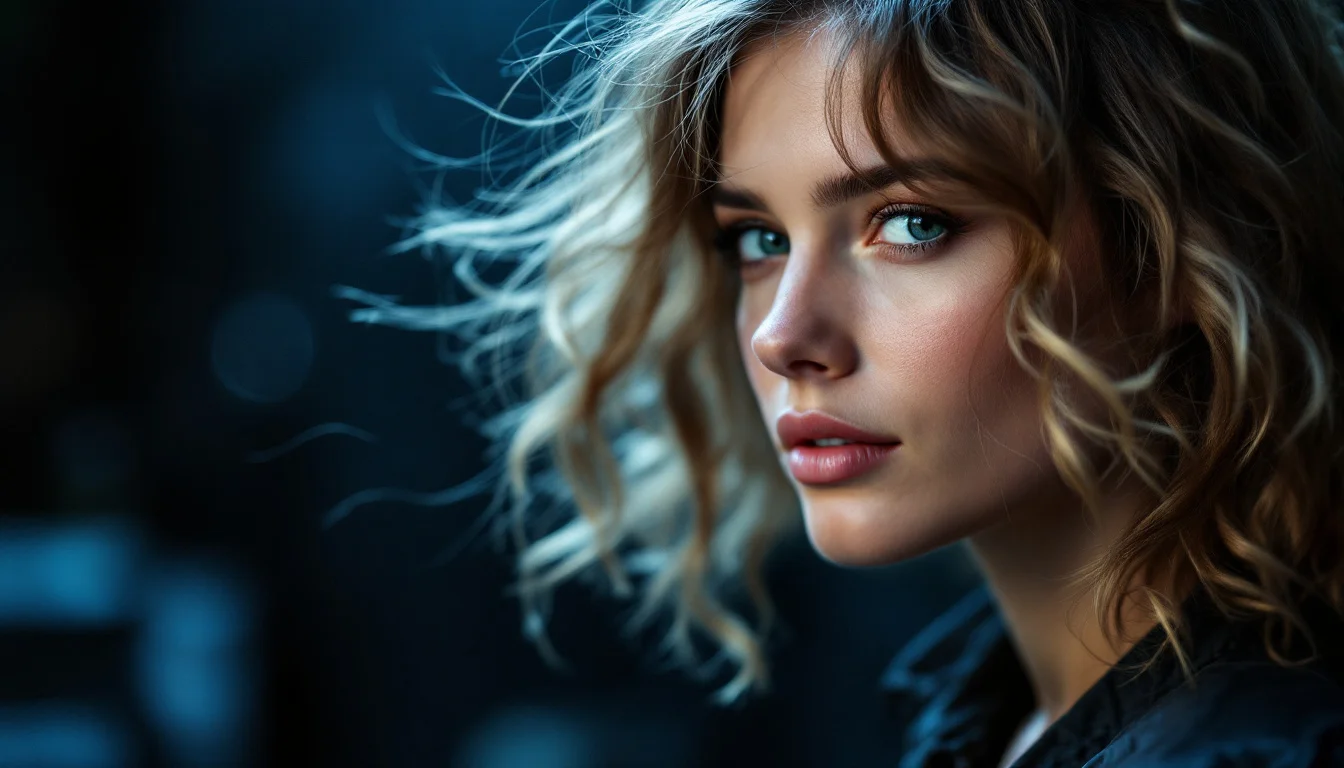
Beyond pure color, the spatial direction of the beam literally sculpts the hair. Backlighting profoundly alters the perception of an artist's volume and aura. A low-angle backlight sharpens and highlights the contours of the hair and shoulders, drawing attention to the face and expressions. This technique effectively separates the artist from the surrounding darkness.
The Dressing Room Trap: Why Your Smartphone and Mirror Are Lying to You
The Distortion of the Prep Environment
The most common mistake before stepping on stage is greenlighting a beauty look under the lighting of a standard dressing room. These spaces are rarely equipped with high-CRI lights capable of replicating the demands of the main stage. As a result, the artist examines their reflection under fluorescent tubes or domestic bulbs that smooth out contrasts and mask colorimetric errors.
The Screen as a Deceptive Filter
The second layer of this illusion occurs when the artist uses their phone camera to capture their look. The displayed image is never a neutral reflection of physical reality. Smartphones alter perceived colors through computational image processing. Depending on the manufacturer and the selected camera modes, algorithms smooth out grain, adjust contrast, and rebalance the white levels. Furthermore, the screen itself introduces another variable: brightness, display settings, and color temperature. Approving an icy blonde or an ombré based on a dressing room selfie almost inevitably guarantees an optical surprise once the artist steps into the reality of stage spotlights.
Perception is Cognitive: Does Your Audience See What You See?
Language as an Optical Filter
A performer's visual identity doesn't rely entirely on the colorimetry of their hair; it is also shaped by the brain of the person looking at them. While on tour, audience perception can vary wildly based on their linguistic and cultural backgrounds.
Certain research in cognitive science highlights that the semantic classification of colors can alter how the brain processes shades. For instance, according to various recognized studies in cognitive psychology, Russian speakers have two distinct words for blue (dark blue and light blue) and are therefore more sensitive to nuances within that region of the spectrum. However, the measured difference occurs just a few hundred milliseconds after the initial visual intake, indicating a cognitive difference rather than a strictly visual one. The audience isn't merely passively receiving stage light: their brains are actively reconstructing the hair color they are observing.
FAQ: Managing Your Hair Color for the Stage
How can I test the appearance of my color before a tour?
It is impossible to lock in a single shade under ever-changing lighting. The most technical approach involves having a conversation with the lighting designer to understand the set's dominant temperatures. During prep, it's helpful to use high-CRI light sources calibrated around 5,500–6,500 K to get an accurate baseline rendering, close to natural daylight. From there, exposing the hair to lights that emulate warm spots (2,700–3,500 K) and cool spots (5,000–6,500 K) allows you to see how the pigments will actually react.
What should I do in the case of highly saturated (RGB) lighting?
If the stage design includes heavy color washes, hair and makeup must be adapted accordingly. Magenta or deep red lights cancel out cool tones, while blue lights dull reds and pinks. Preparing for the fact that a flamboyant pink dye job might look extremely dark or even black under intense blue lighting is an essential precaution when fine-tuning the overall art direction of your look.
Conclusion: Beyond Pigment, Light as an Identity Tool
Color management in the modern music industry is fully integrated into technical stage design. As LED technologies evolve and lighting becomes increasingly directional and saturated, the appearance of performers becomes an entirely malleable medium.