The Guide to Stage Buns: Engineering and Variations
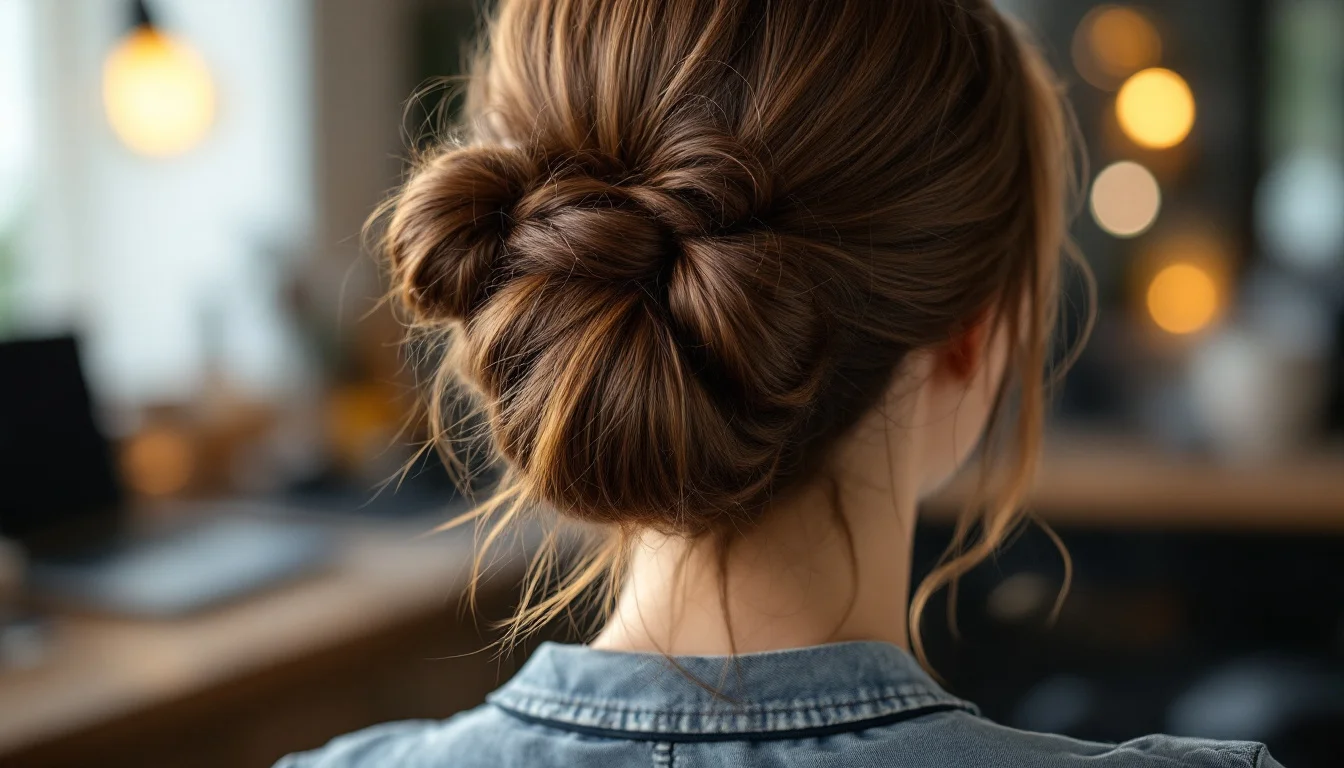
A dressing room offers a static and often deceptive view of a hairstyle. In front of the mirror, every strand seems perfectly secured. Yet, the reality of a live stage imposes intense and unpredictable physical demands.
According to the specialized publication Latest Hairstyles, a stage hairstyle must meet two needs: it must be beautiful enough to make the performer feel confident, and sturdy enough to survive jumps, turns, and backstage chaos. The real challenge lies in the internal design of the updo.
On stage, the key is mastering balance and the choice of anchor points. This allows stylists to build a foundation capable of absorbing the energy of a choreographed performance without giving way.
Key Takeaways
- Continuous anchoring: Braids and twists secure the hairstyle much more reliably than multiple small, isolated bobby pins.
- Weight management: Using lightweight foam bases simulates a massive bun without throwing the performer off balance.
- Choosing accessories: Finishing pieces must be small and lightweight, like crystal hairpins, so they don't go flying during a sequence of turns.
- Protecting the hair fiber: Changing the placement of the updo from time to time helps reduce the risk of breakage while on tour.
Backstage Prep: Why Bobby Pins Often Fail
The meticulousness of dressing room prep does not guarantee an updo will survive the dynamics of a choreography. An excessive accumulation of individual anchor points often proves to be a structural weakness backstage.
The Mechanical Limits of Isolated Fasteners
A standard metal bobby pin only secures a tiny section of hair. When a performer goes into motion, the weight of the hair violently pulls on these isolated fasteners. For example, a cascading bun precisely crafted over forty-five minutes can be completely ruined after a single jazz number. The pins end up barely holding onto the unraveled hair.
This scenario illustrates the chasm between how a style looks in the mirror and how the hair behaves in motion. Localized fixations will inevitably fail if they are not supported by a load-bearing structure.
The Essential Principle of Anchoring
To prevent this collapse, tension must be distributed across a continuous base. The best stage hairstyles generally feature a braid or twist that serves as a fundamental anchor. The overall look thus appears soft and airy from the audience. This internal framework absorbs shocks and lateral pulls, effectively supporting the hairstyle. This structural locking is perfectly exemplified when continuous Dutch braids feed directly into the base of a coiled bun, preventing the whole thing from budging even during sudden movements.
Adaptation Guide: Which Bun for Which Type of Performance?
The choice of hairstyle depends on the physical exertion required on stage and the texture of the hair. The placement of the bun also directly influences the audience's perception of the character.
Placement as a Visual Foundation
The placement of the bun changes the effect conveyed to the audience. A high bun projects a trendy, bold image. A mid-level bun proves balanced and versatile, while a low bun guarantees a professional, understated effect. It is important to distinguish a true bun, which requires a structured coiling technique, from a simple "top knot." The latter is primarily characterized by being perched right at the crown of the head, without requiring short or shaved sides. The version featuring shaved sides leans more toward an "undercut bun." Regardless of the chosen height, achieving a solid classic bun requires a systematic six-step method: brushing to detangle the hair, gathering it into a ponytail, choosing the placement, gently twisting the ponytail, coiling it around its base, and finally securing it firmly with a hair tie.
Adapting to Hair Length
The style must absolutely be tailored to the hair's actual length. You should never force the fiber: imposing a tightly pulled style on short hair can backfire on the performer. Conversely, abundant hair can beautifully complement the body's dynamics. There is a moving-volume variation where heavy curls left cascading down the back have enough weight to swing. They follow the movement fluidly without blurring the silhouette.
Variation Selection Chart
| Discipline and Stage Movement | Recommended Style | Activity Level | Implementation Notes |
|---|---|---|---|
| Acrobatics and intense turns | Double braided bun | Very high | Composed of two backward-facing Dutch braids that feed into a coiled bun at the crown. This variation offers an excellent structural base, though its durability also depends on hair texture, the products used, ambient humidity, and the quality of the bobby pins. |
| Comedy and theatrical acting | Textured low bun with fishtail braid | Medium | The fishtail braid running along the side acts as a headband, sweeping all the hair toward the nape of the neck. A few loose strands near the ear prevent the look from appearing too rigid. |
| Dynamic roles (short hair) | Asymmetrical slicked-back bob | Low | Consists of a textured wavy bob. Using a few rhinestone clips effectively secures one slicked-back side, preventing strands from falling into the performer's eyes during peak action. |
Optical Illusions: Managing Volume and Accessories Under the Spotlights
On a large stage, hair volume plays a crucial role in a character's presence. However, artificially increasing this volume solely by adding massive hairpieces can weigh down the neck during fast-paced choreography.
Structural Trompe-l'Œil
Hairstyling offers lightweight alternatives. The classic pearl-adorned ballet bun relies on a specific shape, the "bun donut," placed beneath the mass of hair. This support provides a perfectly round shape without requiring an excessive amount of hair. It thereby avoids adding the punishing weight of a heavy hairpiece.
Managing Decorative Elements
Integrating metal pieces and jewelry comes with strict safety imperatives. Heavy ornaments can become cumbersome under the centrifugal force of turns. The choice of finishing accessories matters immensely for hold. Small crystal flower pins are considered ideal: they are small enough not to fly off during a turn sequence, while beautifully catching the stage lights thanks to their facets.
Hair Health on Tour: Combating Tension and Breakage
While a solid updo secures a single performance, frantically repeating it throughout a long tour puts massive stress on the hair roots and shafts.
The Mechanics of Hair Damage
Using improper fastening tools weakens the hair between acts. Hair ties with small metal connectors (often called metal-clasped elastics) are identified as a frequent cause of severe snagging and breakage. Industry professionals recommend opting for fabric-covered elastics or metal-free spiral ties as alternatives. Fasteners containing metal can actually cause cuticle lesions during removal, which is often done in the frantic rush of quick costume changes.
Preserving Hair Health
Achieving a perfectly slicked-back look requires pulling tightly on the strands, which can contribute to immediate hair shaft breakage. Constant tension also stresses the hair follicle over time. To protect the hair, it is recommended to occasionally change the bun's placement, reducing the strain on the same areas of the scalp. Maintenance hygiene between shows also plays a fundamental role. However, washing frequency varies greatly and must be tailored to hair type (fine, thick, curly, coily), scalp nature (oily or dry), and physical activity levels. For coily or very dry hair, overly frequent washing can be excessive and worsen the dryness of strands already subjected to heavy styling products.
Adjustments for Extreme Hair Densities
Performers with exceptionally dense hair must follow specific protocols to avoid hair pulling and traction alopecia. For very long hair, four technical adjustments should be made:
- Use much stronger elastics to support the thickness.
- Carefully divide thick hair into sections before coiling.
- Avoid securing the base too tightly against the roots.
- Tame superficial flyaways with a minimum of product so as not to weigh down the structure.
Frequently Asked Questions (FAQ): Stage Essentials
Why is it risky to rely solely on standard bobby pins for a dance performance?
A standard metal bobby pin only secures a tiny section of hair. When a performer goes into motion, inertia and weight pull violently on these isolated fasteners. Without a continuous base like a braid or twist to anchor the hairstyle, this localized pinning system can fail and destroy the entire updo in a single number.
How do you adapt a hairstyle for highly dynamic roles with short hair?
Forcing a complex bun architecture onto short hair is not recommended, as the updo often proves unstable. The alternative is to embrace the natural length with a textured wavy bob. By using simple, well-secured side clips, you can clear the field of vision and keep strands from falling into the eyes during peak action.
Conclusion
Mastering fasteners and distributing tension transforms a simple hairstyle into a true stage creation. When a bun is designed to withstand the movements of a choreography rather than simply look dazzling in a mirror, it ceases to be a worry. Just like a reinforced costume or technical stage makeup, the hairstyle should fade from the performer's mind the moment the spotlights come on, granting them the freedom to deliver a complete, uninhibited performance.